
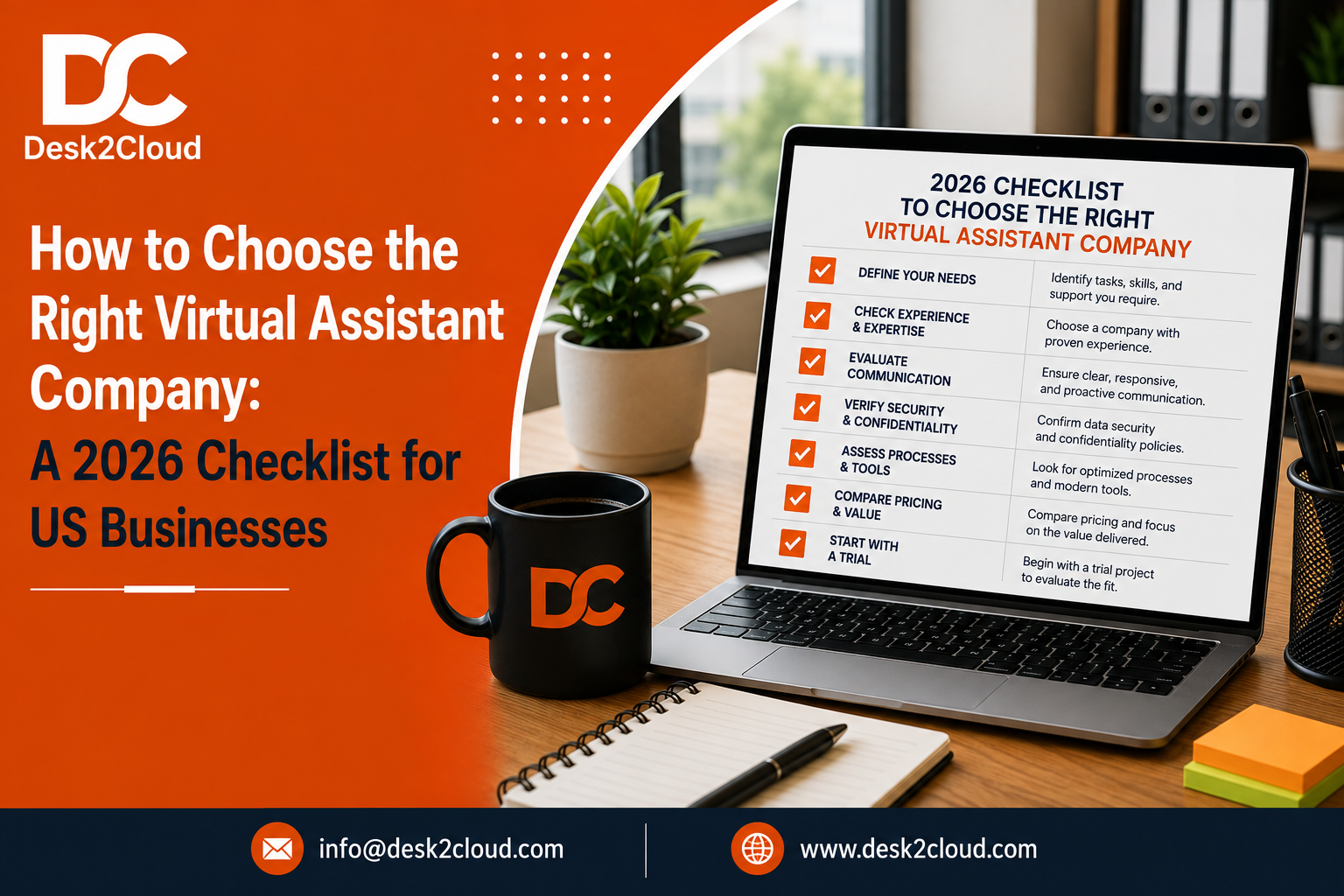
To choose the right virtual assistant company in 2026, evaluate providers on vetting process, pricing transparency, security practices, AI proficiency, and replacement policy, not just the lowest hourly rate. This matters even more for USA-based businesses, where compliance expectations, data privacy standards, and client-facing professionalism are typically higher than in less regulated markets. Businesses that skip this step often end up with mismatched hires, hidden fees, or assistants who leave within weeks.
This guide breaks down exactly what to look for, what questions to ask, and which red flags mean you should walk away, so US businesses can hire a virtual assistant company with confidence.
Why Choosing the Right Virtual Assistant Company Matters
Not all virtual assistant services are built the same way. Some are managed agencies with trained, supervised staff. Others are little more than freelance marketplaces with minimal screening.
A poor match costs more than money. It costs time, delayed projects, and repeated onboarding. One reported case involved a business that hired a low-cost assistant for $6 per hour with a large setup fee and a six-month contract, only to replace them after three weeks due to quality issues (ClearDesk VA Services FAQ 2026). For USA companies especially, where client expectations around communication and turnaround time are strict, choosing carefully upfront avoids this kind of expensive restart.
Step 1: Define What You Actually Need
Before comparing providers, get specific about the work itself. Vague requests like "help with admin work" lead to mismatched hires.
-
What specific tasks will the assistant handle: scheduling, documentation, data entry, reporting, or customer communication?
-
Do you need a single dedicated assistant or a small managed team, such as our back-office assistance model?
-
How many hours per week do you realistically need, and how might that change seasonally?
-
Do you need industry-specific experience, such as real estate, healthcare, or e-commerce?
If you cannot clearly describe what "done" looks like for a task, you are not ready to hand it off yet.
Step 2: Evaluate the Vetting and Training Process
Ask every provider how they screen and train their assistants. Vague answers such as "we assess their skills" without specifics are a warning sign (VA Masters Best VA Companies 2026).
A strong provider should be able to explain:
|
Question to Ask |
What a Good Answer Looks Like |
|
How are assistants tested before placement? |
Specific skills assessments, not just interviews |
|
Who trains and supervises the assistant? |
A named manager or team lead, not "the assistant works independently" |
|
What happens if the fit is poor? |
A clear, documented replacement policy |
|
How is quality reviewed ongoing? |
Regular check-ins, reporting, or audits |
Step 3: Check How They Use AI Tools
By 2026, most virtual assistant providers use AI tools for drafting, research, and scheduling. This is not a problem on its own, but it changes what you should ask.
Confirm how the company reviews AI-assisted work before it reaches you or your customers, and ask how client data is stored and used with AI tools. The strongest assistants in 2026 are described as AI-fluent operators who use AI to draft and research, then apply human judgment to everything that matters (VA Masters Best VA Companies 2026). If you want to understand this hybrid model in more depth, see our earlier post on AI-augmented virtual assistants.
Step 4: Review Pricing Structure Carefully
Pricing is where many businesses get caught off guard. Look past the headline hourly rate and ask about the full cost structure.
-
Minimum hour commitments. Confirm the real monthly cost, not just the advertised rate.
-
Overage rules. Understand what happens when your assistant exceeds allotted hours.
-
Cancellation terms. Know how to exit the contract cleanly if the fit is not right.
-
Hidden fees. Setup fees, mandatory long-term contracts, and confusing pricing tiers are red flags worth questioning directly.
As a general benchmark, quality virtual assistant services typically range from $12 to $25 per hour depending on location and specialization, and rates far below that often signal inadequate vetting (ClearDesk VA Services FAQ 2026).
Step 5: Ask About Security and Data Access
Virtual assistant work often touches calendars, inboxes, customer records, and financial details, so security should be part of the selection process, not an afterthought.
A trustworthy provider should offer:
-
Least-privilege access, meaning assistants only get the permissions needed for their specific tasks
-
Confidentiality agreements covering both the company and individual assistants
-
A documented offboarding process, including credential revocation and data deletion
-
Clear policies on how client data is stored, processed, and used with any AI tools
Our admin and documentation support team follows structured access and confidentiality protocols built specifically for US compliance standards.
Red Flags to Avoid When Choosing a Virtual Assistant Company
Watch for these warning signs during the evaluation process.
-
A provider that cannot clearly explain its vetting or training process
-
Rates that seem too good to be true, especially far below $10 per hour
-
Requiring payment before matching you with an assistant
-
No clear replacement policy if the assistant is not a good fit
-
Vague or evasive answers about data security and AI usage
-
Assistants with a pattern of short-term placements under six months, which often signals high turnover (R3Source VA Reliability Guide 2026)
How to Run a Trial Before Committing
Most experienced buyers recommend testing fit before signing a long-term contract.
-
Start with a defined trial period, typically 14 to 30 days, focused on a specific, measurable task.
-
Begin with 10 to 20 hours per week rather than a full-time commitment, giving both sides time to build trust.
-
Document the top recurring tasks you want handled, and use these as the basis for evaluating performance.
-
Review results against clear outcomes, not general impressions, before scaling the engagement.
FAQs About Choosing the Right Virtual Assistant Company in USA
1. What should I look for first when choosing a virtual assistant company?
Start by defining the specific tasks you need handled, then evaluate the provider's vetting process, pricing transparency, and security practices before comparing hourly rates.
2. How much should a virtual assistant cost in 2026?
Quality virtual assistant services typically range from $12 to $25 per hour depending on location and specialization. Rates far below this range often indicate inadequate vetting or training.
3. What are the biggest red flags when hiring a virtual assistant company?
Vague answers about vetting, unusually low rates, upfront payment before matching, no replacement policy, and unclear data security practices are all significant warning signs.
4. Should I hire a managed virtual assistant agency or a freelance marketplace?
A managed agency offers supervision, structured training, and a replacement policy, while a freelance marketplace often requires more oversight from you. Choose based on how much management you want to handle yourself.
5. How do I know if a virtual assistant company uses AI responsibly?
Ask specifically how they review AI-assisted work before it reaches you, and how client data is stored and used with AI tools. Vague or evasive answers are a warning sign.
Conclusion
Choosing the right virtual assistant company in Greenville 2026 comes down to more than price. Vetting quality, pricing transparency, AI review processes, and security practices all determine whether the partnership actually saves you time or creates new problems. For USA businesses, adding compliance and data-handling standards to the checklist is just as important as cost. Define your needs clearly, ask direct questions, and run a trial before committing to a long-term contract.
Looking for a virtual assistant company built for USA businesses, with transparent pricing, trained staff, and real accountability? Contact Desk2Cloud today to find the right fit for your business.