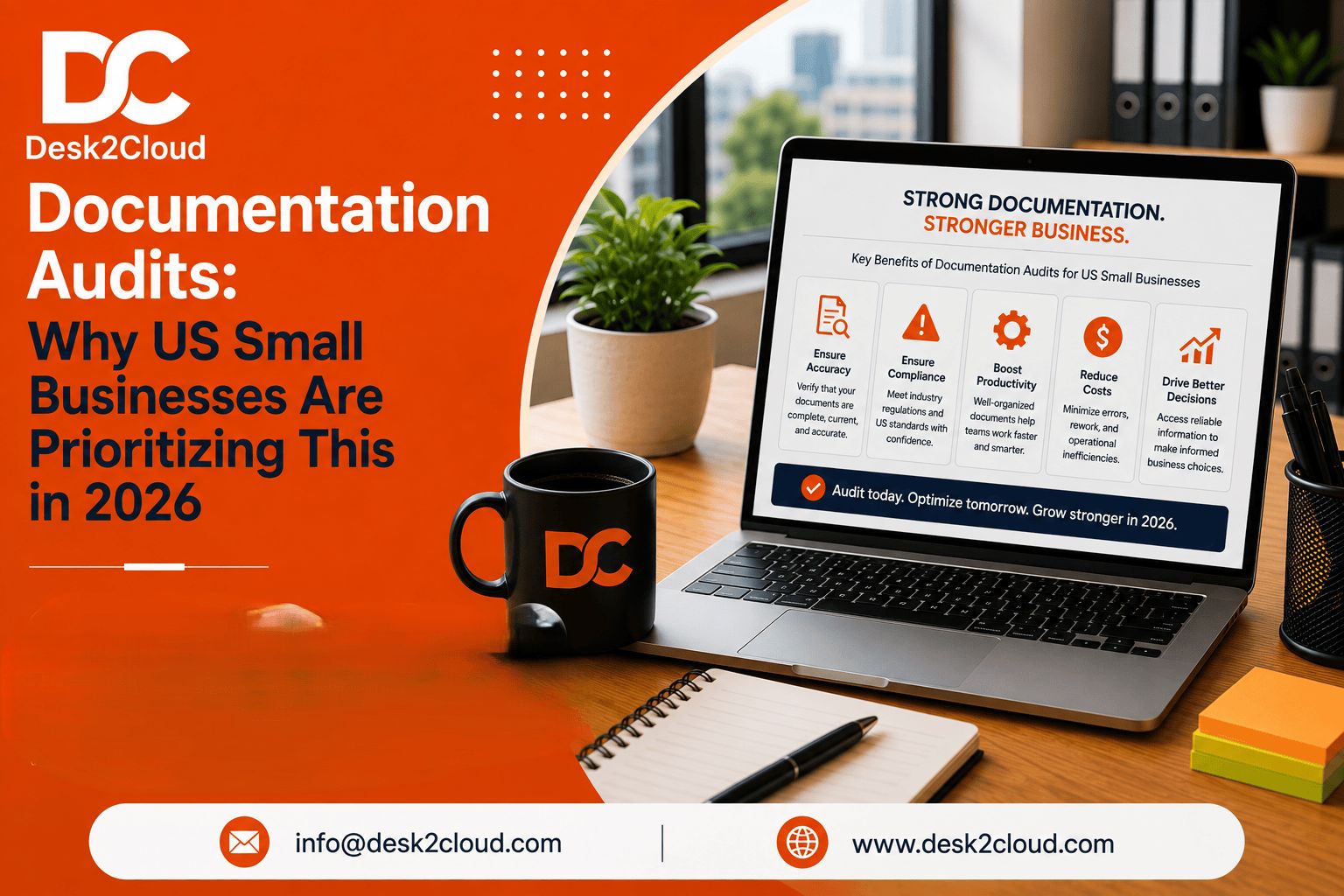
A documentation audit is a structured review of a business's records, contracts, invoices, and compliance files to confirm they are accurate, complete, and easy to produce if needed. USA small businesses are prioritizing documentation audits in 2026 because regulators are relying more heavily on data analytics to flag inconsistencies, and undocumented work is increasingly treated as work that was never done.
This blog explains what a documentation audit actually covers, why 2026 has raised the stakes, and how small businesses across the USA can build a simple, repeatable audit process without turning it into a full-time job.
What Is a Documentation Audit?
A documentation audit is not the same as a government tax audit. It is a proactive internal review a business runs on its own records, checking that invoices, contracts, receipts, employee files, and compliance documents are organized, current, and retrievable.
The goal is not to document everything a business does. It is to maintain the minimum viable set of records that proves important business activity actually happened, in a format a lender, client, auditor, or regulator could review without confusion.
Why 2026 Changed the Stakes for Documentation
Several shifts this year have pushed documentation audits from a back-office task to a business priority.
-
AI-powered audit selection. Tax authorities are now using AI-driven analytics platforms to flag inconsistencies and select audit targets more precisely than in prior years, which means sloppy records are more likely to draw attention.
-
New reporting requirements. Recent federal reporting changes have added complexity to how businesses document payroll, tips, and deductions, raising the bar for what "complete" records look like.
-
Rising audit frequency. Recent compliance research found that a majority of organizations now undergo four or more audits or assessments per year, and record-keeping failures, including incomplete audit trails, remain a leading driver of compliance penalties.
-
Higher financial exposure. Regulatory non-compliance fines have climbed into the billions annually, with record-keeping failures alone contributing a meaningful share of global penalties.
Businesses that treat documentation as an ongoing habit, rather than a scramble before tax season, are far better positioned when a review request actually arrives.
What a Documentation Audit Should Cover
A useful documentation audit looks across several categories of business records, not just tax paperwork.
|
Category |
What to Review |
|
Financial records |
Invoices, receipts, bank statements, payment support |
|
Contracts and agreements |
Client contracts, vendor agreements, signed terms |
|
Employee records |
Payroll files, timesheets, classification documentation |
|
Compliance files |
Licenses, permits, industry-specific certifications |
|
Entity records |
Formation documents, ownership records, state filings |
Retention periods vary by document type. Common business records are generally kept for three to seven years, while formation documents, contracts, and ownership records are often kept permanently. Industry-specific rules can extend this further, since healthcare compliance documentation typically requires longer retention windows under HIPAA, and financial services records often follow separate SEC and FINRA timelines.
How to Run a Documentation Audit: A Step-by-Step Framework
Small businesses do not need an enterprise compliance team to run an effective documentation audit. A simple, repeatable process works well.
-
Centralize records first. Move invoices, contracts, receipts, and payment support into one primary system or folder structure, instead of scattered emails and downloads.
-
Sort by category and date. Group records by type, such as financial, employee, or compliance, and confirm each has a clear date and description.
-
Check for gaps. Identify missing signatures, incomplete invoices, or contracts without a final signed copy.
-
Apply retention rules. Flag records that are past their required retention period for secure disposal, and confirm nothing required is missing.
-
Schedule a recurring review. A mid-year check, separate from tax season, helps catch discrepancies before they compound.
This process pairs naturally with our admin and documentation support services, where a trained team manages this review on an ongoing basis rather than as a once-a-year scramble.
Common Documentation Gaps Small Businesses Miss
Even organized businesses tend to have a few recurring blind spots.
-
Unlabeled or partial exports instead of complete, organized records
-
Missing signed copies of contracts that only exist in draft form
-
Inconsistent entity information, such as outdated officer or registration details
-
No clear system for separating personal and business expense documentation
-
Employee classification records that have not been updated as roles changed
Each of these gaps is minor on its own, but together they create exactly the kind of confusion that turns a routine review into a lengthy back-and-forth with a regulator, lender, or client.
Why Outsourcing Documentation Audits Makes Sense for Small Businesses
Running a documentation audit takes time most small business owners do not have, and inconsistent internal effort often means records improve right before tax season, then slip for the rest of the year.
An outsourced data and reporting team can maintain this consistency by reviewing and organizing records on a regular schedule, flagging gaps as they appear rather than after they become a problem. This approach mirrors the reasoning many USA businesses now use across their broader back-office operations, which we covered in our post on top administrative tasks businesses should outsource in the USA.
Frequently Asked Questions
1. What is the difference between a documentation audit and a tax audit?
A documentation audit is a proactive internal review a business runs on its own records, while a tax audit is an external review conducted by a regulatory authority. Running internal audits regularly reduces risk during an actual tax audit.
2. How often should a small business run a documentation audit?
Most businesses benefit from at least one mid-year review in addition to standard tax season preparation, since this helps catch discrepancies before they compound.
3. How long should a small business keep its records?
Common business records are generally kept for three to seven years, while formation documents, contracts, and ownership records are often kept permanently. Industry-specific rules may extend these timelines further.
4. What happens if a business cannot produce documentation during a review?
Businesses that cannot produce required documentation typically bear the burden of proof, which can lead to denied deductions, penalties, or extended review periods.
5. Can documentation audits be outsourced?
Yes. Many USA small businesses outsource ongoing documentation review to a back-office support team, ensuring records stay organized and audit-ready throughout the year rather than only before tax season.
Conclusion
Documentation audits are no longer a once-a-year formality for USA small businesses. With regulators using more advanced analytics and audit frequency climbing across industries, businesses that keep organized, complete, and retrievable records year-round are far better protected than those scrambling to reconstruct files under pressure. Building a simple, recurring audit habit now is far easier than facing a compliance gap later.
Want organized, audit-ready documentation without managing it yourself? Contact Desk2Cloud today to build a documentation support process for your USA business